Why Ukraine’s Demographic Crisis Should Concern Washington Now | Opinion
By Igor Bondar
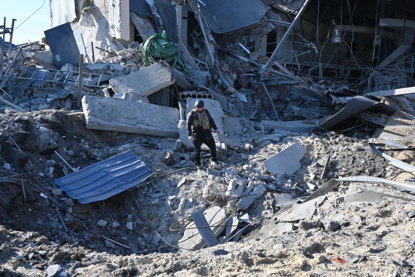
For many in Washington, the war in Ukraine still looks like a military contest that can be measured in territory gained or lost. But inside Ukraine—especially in cities like Kharkiv, which Russia continues to shell regularly—another transformation is already underway. As young families leave during a prolonged war, Ukraine risks emerging from victory too demographically weakened to remain the stable democratic partner the United States expects it to be.
The most important transformation is no longer happening on the front line but inside Ukrainian society itself, where wartime migration is quietly reshaping the country’s postwar future.
Recently, Ukraine allowed more men aged 18 to 22 to travel abroad during martial law. On paper, this looks like a technical adjustment. In reality, it signals a new phase of the war—one in which the country is forced to balance survival today against its future tomorrow.
The reasons are understandable: military exhaustion, personnel shortages and declining motivation among young people. Units at the front often cannot rotate because there are not enough soldiers. The government does not speak openly with society about mobilization; it wants to remain acceptable both to those serving and to those who are not. This is today’s Ukrainian reality.
Many of these young men do not leave alone. Their parents leave with them. Families relocate to the Czech Republic, Germany or Norway. They find housing, work and schools. And once a family rebuilds its life abroad, returning becomes less likely—especially if the war continues for years.
This is not just a demographic problem; it is a strategic one.
Ukraine is fighting to remain part of the democratic world. But democracies are not defended by armies alone. They depend on teachers, engineers, writers, students and entrepreneurs—precisely the people who are quietly disappearing from the country’s future.
From Washington, the central question often sounds like this: Can Ukraine hold the front line?
From Kharkiv, another question is becoming more urgent: Who will live here after the war ends?
This matters for American policy. The U.S. has helped Ukraine avoid military collapse. But preserving Ukraine as a functioning democratic society requires more than supplying weapons. It requires recognizing that long wars reshape countries even when they do not lose territory.
Russia understands this dynamic well. Moscow is trying to occupy not only land but society itself. While young Ukrainians leave government-controlled areas, Russia is resettling citizens from distant regions into occupied parts of eastern and southern Ukraine. The goal is simple: change the population and make occupation irreversible.
The war will continue as long as Russia remains capable of fighting. This is not only about President Vladimir Putin but about the broader political system around him—and, crucially, about a Russian society that still supports the war as a mission of “liberation.” That is why peace in both Ukraine and Europe depends heavily on continued American action and on the endurance of Ukraine’s armed forces.
Meanwhile, Ukraine continues to lose people not only at the front but also in the rear—even as Russia brings new settlers into occupied territories in preparation for future claims of liberation.
This is not a distant scenario; it is already happening.
American support remains essential to Ukraine’s survival. But survival is not the same as stability. A country can win a war and still emerge too weakened to secure its democratic future. That possibility should concern Washington no less than developments on the battlefield.
Supporting Ukraine now increasingly means supporting the conditions under which its population can return after the war, not only helping it hold territory during the war.
There is another reason this matters for the U.S.
The war in Ukraine has become a test of whether democracies can sustain long-term commitments under pressure. If Ukrainian society gradually empties out while the war continues without a clear end, the signal to other countries facing authoritarian threats will be unmistakable: even successful resistance does not guarantee a future.
That is not the outcome Ukrainians are fighting for today.
From Kharkiv, the war no longer looks like a temporary crisis. It looks like a permanent condition shaping daily decisions—whether to stay or leave, whether to build a future at home or abroad. These decisions accumulate quietly, family by family, until they begin to transform the country itself.
Washington helped Ukraine survive the first stage of the war. The next challenge is helping ensure that the country that survives remains strong enough to rebuild.
Because today Ukraine is defending not only its territory; it is defending its next generation.