Kashmir Exploitation Day: A Dark Chapter in Modern History
By: Shumaila Khan
In April 2019, general elections were held in India, resulting in the re-election of the Bharatiya Janata Party (BJP), a political party aligned with the far-right Hindu nationalist organization, Rashtriya Swayamsevak Sangh (RSS). Narendra Modi assumed office as Prime Minister for a second consecutive term. Soon after returning to power, his government launched a calculated assault on the autonomy of Jammu and Kashmir—one that would shake the very foundation of the region’s identity.
On August 5, 2019, in a unilateral and unconstitutional move, the Indian government revoked Articles 370 and 35A of its constitution. These articles had granted Jammu and Kashmir special status, allowing it to have its own constitution, flag, and control over local residency laws. The abrogation of these constitutional safeguards marked one of the darkest days in the history of Kashmir—now observed as Kashmir Exploitation Day.
The removal of Article 370 stripped Kashmir of its special constitutional status, while the revocation of Article 35A opened the door for demographic engineering. The latter had stipulated that only those born in the region, or who had lived there for generations, could claim permanent residency. With its removal, non-Kashmiris from other Indian states began settling in the region, threatening to dilute the ethnic and cultural identity of the native Muslim population. It was a direct attack on the demographic fabric of the valley.
In the wake of this decision, the Indian government imposed a brutal curfew and communications blackout across the region. For months, the internet was cut off, mobile networks were disabled, and the press was silenced. Political leaders, activists, and thousands of civilians were detained without charges. Public life came to a standstill, and basic human rights were trampled under the guise of national security.
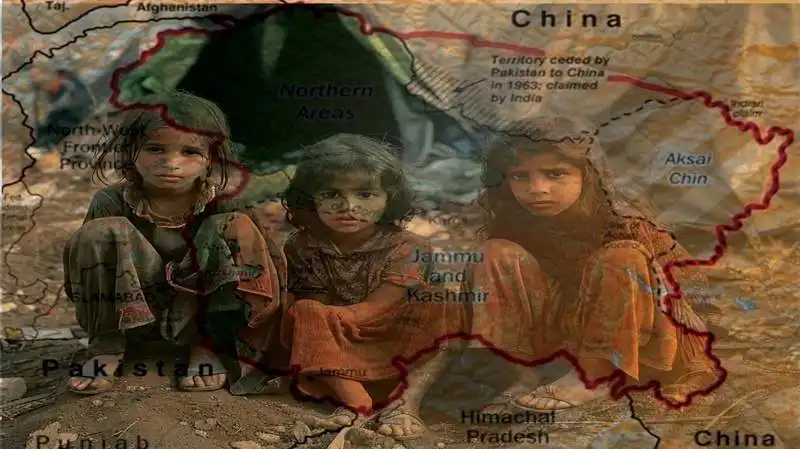
To further cement its control, India passed the Jammu and Kashmir Reorganization Act, effectively splitting the region into two federally administered territories—Jammu & Kashmir and Ladakh. This political restructuring was aimed at undermining the unity and voice of the Kashmiri people.
In the past six years, this policy of suppression has resulted in devastating consequences: hundreds of thousands of Kashmiris have lost their livelihoods, education has been disrupted, and a climate of fear and uncertainty looms large. The region has, in essence, become an open-air prison.
India’s actions are not only morally reprehensible but also a blatant violation of international law and the UN Charter of Fundamental Human Rights. The abrogation of Kashmir’s autonomy and the use of military force to silence its people have laid bare the true face of the so-called world’s largest democracy.
Despite all efforts to crush their spirit, the people of Kashmir have refused to surrender. They continue to fight for their right to self-determination, enshrined in multiple United Nations Security Council resolutions. Their struggle is not merely political—it is existential.
As the global community commemorates August 5 as a day of remembrance and resistance, it must confront the uncomfortable truth: Kashmir is still occupied, still bleeding, and still yearning for freedom. The soil of Kashmir is stained with the blood of martyrs, yet its people remain unbowed.
This day serves as a reminder to the world: silence in the face of oppression is complicity. The world must rise beyond political interests and stand on the side of justice, humanity, and the inalienable rights of the Kashmiri people.