Justice, Peace, and the True Reality of Life
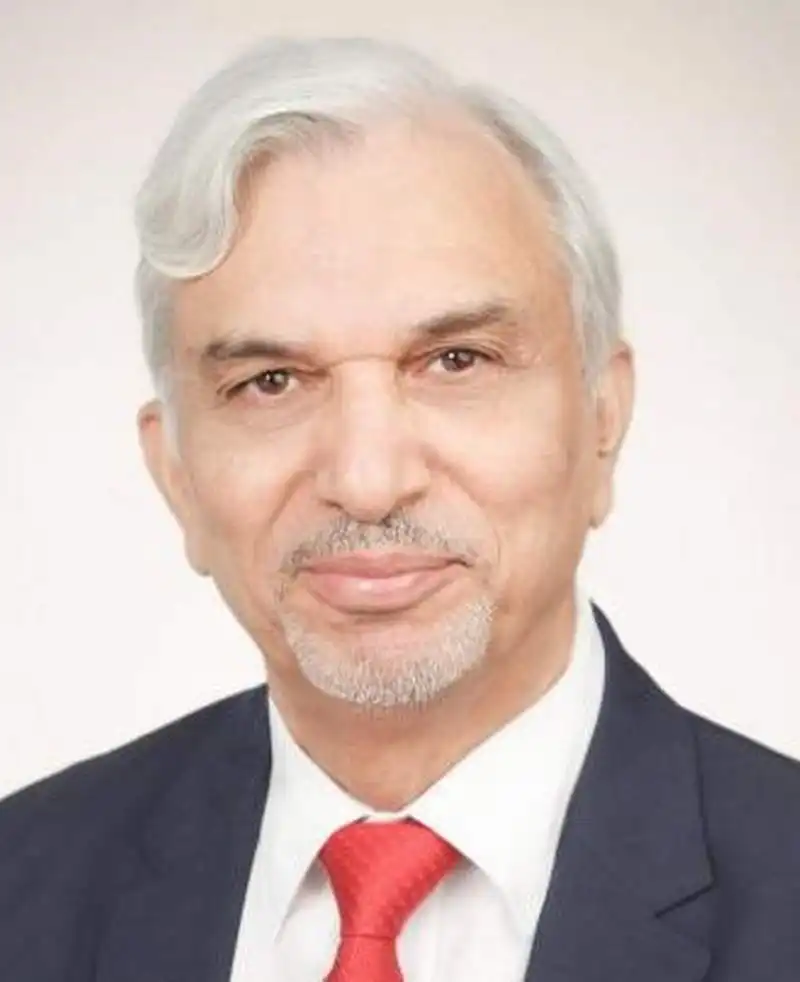
By Arshad Ahmad Shahbaz
Vice Chairman, Foreign Advisory Council, Darmstadt – Germany
When a human being reflects on the secret of his creation, one truth becomes evident: survival and progress depend not on individual pursuits but on collective principles. No individual, nation, or society can achieve true development unless its foundation rests on justice, fairness, love, and peace. A structure built solely on power, wealth, or authority is inherently fragile and destined to collapse. In contrast, a society founded on justice and peace not only endures but also provides generations with tranquillity, enlightenment, and spiritual fulfilment.
History testifies that justice and peace have always been the greatest necessities of life. They reveal the essence of humanity. Justice means that every individual receives their due rights and that no one is wronged. This is not confined to a particular time or culture; it is a universal obligation for all societies in every era.
The Holy Qur’an declares:
“Indeed, Allah commands you to render trusts to whom they are due, and when you judge between people, judge with justice.” (Surah An-Nisa 59)
This verse makes it clear that justice is not merely a judicial or governmental responsibility; it is a sacred duty for every individual, family, and state. Justice requires that fairness prevail in all dealings, ensuring that no one’s rights are violated.
At a time when the world operated through power and tribal bias suppressed fairness, Islam laid down the foundation of justice. The Holy Prophet ﷺ proclaimed:
“Even if Fatimah, daughter of Muhammad ﷺ, stole, her hand would be cut off.”
This declaration established an uncompromising standard of justice that defied the oppressive norms of ignorance.
Without justice, the concept of peace and tranquillity in life is merely a dream. Peace is a fundamental human need. Without it, worship, education, commerce, and progress lose their meaning. However, peace cannot be secured through power alone. Devoid of justice, peace is like a lamp placed upon a pile of gunpowder—temporary and fragile. True peace is attainable only through justice.
The Qur’an emphasizes:
“Repel [evil] with that which is better. Then the one between whom and you there was enmity will become as though he were a devoted friend.” (Surah Hum-Sajda 35)
This verse highlights that peace is achieved not only through justice but also through love, gentleness, and good conduct.
Today, when justice is frequently sacrificed for selfish interests, even sacred places of worship fall victim to violence. Mosques, temples, churches, and other sacred spaces connect humans to their Creator. Attacking them is, in reality, an attack on human morality and spiritual values.
The Qur’an states:
“And if it were not for Allah’s repelling some people by others, destruction would have overtaken monasteries, churches, synagogues, and mosques in which the name of Allah is mentioned frequently.” (Surah Al-Hajj 41)
This verse establishes that God created balance among nations to protect places of worship, ensuring that humanity is not deprived of divine remembrance. All sacred spaces fall under this divine protection, as they are vital for spiritual growth. To dishonor or destroy them is to undermine the very foundations of human existence. History reminds us that when houses of worship were violated by injustice and bloodshed, civilizations faced natural calamities and societal collapse. These events underscore that peace cannot exist without justice and respect for sanctity.
For over seven decades, Gaza has been drenched in blood. Innocent children’s smiles vanish in explosions. Mothers’ arms remain empty. The blood of the innocent shakes the conscience of humanity. The scales of justice are so burdened with oppression that they have become bloodstained. The cries of Gaza’s children and the tears of mothers present humanity with an urgent question: Is humanity still alive? This tragic reality demonstrates that without justice, peace can never be established.
The life of the Holy Prophet ﷺ remains the brightest example of justice and peace. During the conquest of Makkah, he ﷺ forgave his enemies, showing that true strength lies in forgiveness and mercy. In Madinah, he ﷺ guaranteed equal rights for all faiths and safeguarded justice. The Constitution of Madinah was the first charter in history to demonstrate that peace cannot exist without justice.
Similarly, Hazrat Mirza Ghulam Ahmad (AS) taught:
“Establish justice and fairness in your hearts and show mercy to all humankind. This is the path that leads to God and makes the world a cradle of peace.” (Malfoozat, Vol. 1)
In Essence of Islam, it is noted:
“A true believer is one who loves justice and does not oppress even an enemy.”
Hazrat Khalifatul Masih V (may Allah be his helper) also stated:
“Without justice, peace cannot be established. Wherever there is no justice, there is no peace. If any nation or country wants to end wars, it must adopt justice and equality. The teachings of the Qur’an guarantee the rights of every human being. It is our duty to implement these principles in our personal and collective lives.” (Address, Capitol Hill, USA, 2012)
The modern world reflects the grim reality of a justice deficit. Powerful nations impose their will on weaker ones, exploit resources, and disregard fairness. As a result, regions across the globe suffer from war, conflict, and oppression.
Human greatness does not lie in how much power one can impose on others, but in how much support one can provide to their hearts. Oppression may appear to succeed temporarily, but history shows that oppressors never endure. Love and justice may seem fragile, yet these are the principles that withstand centuries. Justice and benevolence are essential for progress. Benevolence extends beyond justice, fostering compassion and selflessness, and building societies where every heart finds tranquillity and every home becomes a cradle of peace.
Ultimately, it is evident that justice, peace, fairness, and tranquillity are not mere ideals but the true reality of life. Justice stabilises society, peace calms hearts, love binds humanity, and sanctity of worship anchors spiritual responsibility. The only way to rescue today’s world from war, hatred, and calamities is to uphold justice in decisions, fairness in conduct, love in relationships, and respect for sacred spaces. This is the light that can guide humanity out of darkness into true prosperity and enduring peace.